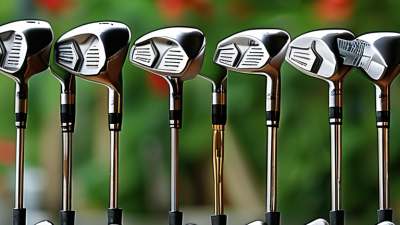
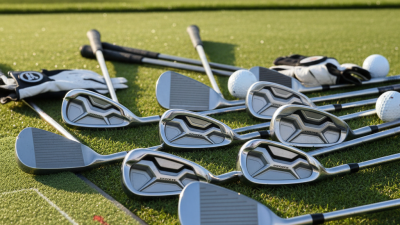
Who Are the Top Golf Irons Manufacturers in China?
China’s golf-equipment industry includes established brands, specialist clubmakers, and factories producing for overseas labels. Yet “top” can mean different things. One buyer may value precise forging; another may need dependable OEM production, consistent tolerances, or flexible order volumes. The name on a clubhead tells only part of the story.
Veteran club designer Tom Wishon has long emphasized proper fitting. In paraphrase, his advice is simple: “Choose fit and performance over appearance alone.” That matters with golf irons. A clean finish and sharp milling look reassuring under showroom lights, but they cannot prove that lofts, lie angles, shaft options, and production quality suit a golfer or a brand’s needs. Small differences matter.
This guide looks at Chinese manufacturers through practical questions: What types of irons do they make? Can they explain materials and manufacturing methods? Do they provide clear specifications and quality checks? And can their samples match later production runs? Those answers deserve more weight than a polished catalogue. Still, a factory’s capabilities can vary by model, order, and quality-control process, so a list alone cannot guarantee results. That is easy to overlook.
For golfers, retailers, and brands, the goal is not simply to find the biggest name. It is to identify a capable partner, verify claims, and judge the finished clubs in hand. The following overview offers a grounded starting point—not a substitute for testing.
China’s Golf Iron Manufacturing Industry: Scope and Structure
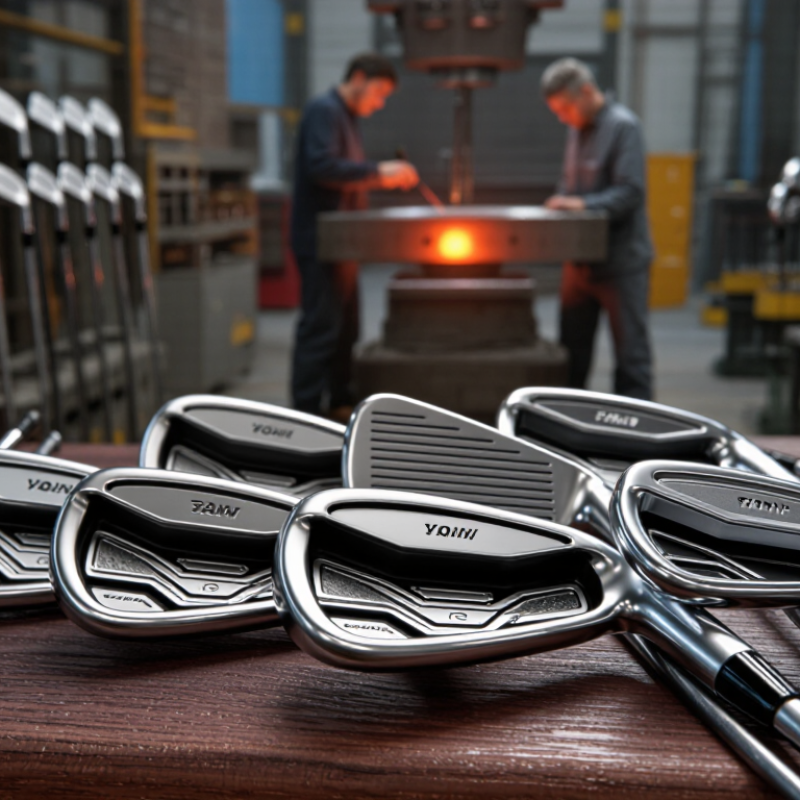
China’s golf-iron manufacturing industry is a network, not a single factory floor. Production can involve specialist workshops for forging or casting, CNC machining, grinding, heat treatment, and surface finishing. Some facilities focus on clubheads, while others coordinate complete sets with shafts, grips, and assembly partners.
The work is precise. A technician may check loft and lie angles, inspect grooves under bright task lighting, and measure head weight against a production specification. Manufacturers often serve different needs, from custom small runs to larger OEM orders. Their capabilities vary, so buyers typically assess sample consistency, material records, testing procedures, and communication before placing repeat orders. A polished sample alone tells little.
Not always.
The industry’s structure also includes component suppliers, tooling providers, quality teams, and export coordinators. This division of labor can improve specialization, but it adds handoffs where measurements or finish expectations may drift. Reliable sourcing depends on clear drawings, agreed tolerances, and checks at more than one production stage. Even then, results deserve review; manufacturing systems are not flawless, and a carefully documented process can still miss a detail.
Who Are the Top Golf Irons Manufacturers in China? - China’s Golf Iron Manufacturing Industry: Scope and Structure
| Industry dimension |
Scope and structure |
How to assess suppliers |
| Product scope |
Golf irons include individual iron heads and assembled clubs. Product ranges may cover long, mid, and short irons, as well as iron sets. |
Confirm which stages are supplied: head only, head with shaft and grip, or a fully assembled club. |
| Manufacturing routes |
Iron heads are commonly produced through casting or forging, followed by machining and finishing. The suitable route depends on the design and performance requirements. |
Ask for the production route, material specifications, process controls, and samples made using the intended process. |
| Materials and components |
Club construction can involve a metal head, shaft, grip, and connecting components. Material selection varies by design and specification. |
Request material grades and component specifications in writing; verify that production samples match the approved specification. |
| Production stages |
A typical workflow can include design and tooling, head forming, machining, surface finishing, assembly, and inspection. A supplier may perform some or all of these stages in-house. |
Map which steps are in-house and which are subcontracted, and identify who is responsible for final inspection. |
| Business models |
Manufacturers may offer contract production, OEM services, or product development support. Capabilities and order terms differ by supplier. |
Clarify design ownership, tooling ownership, minimum order quantities, lead times, and permitted use of product designs. |
| Quality control |
Relevant checks may include dimensions, weight, finish, assembly, and consistency against approved samples. Inspection plans vary by factory and customer requirements. |
Request documented acceptance criteria, inspection records, sample approval procedures, and a process for handling nonconforming products. |
| Supplier comparison |
There is no single capability profile that applies to every golf-iron factory; product focus, equipment, engineering support, and production scope can differ. |
Compare suppliers using the same product brief, technical requirements, sample criteria, and quotation basis rather than relying on a ranking alone. |
| Market data |
Comparable public data on individual factories’ golf-iron output, capacity, and market share is not consistently available. |
Verify capacity and delivery claims directly through factory documentation, production references, and an agreed sample or audit process. |
How Leading Golf Iron Manufacturers in China Are Identified
Who Are the Top Golf Irons Manufacturers in China?
How Leading Golf Iron Manufacturers in China Are Identified
A credible manufacturer is identified through repeatable engineering, not polished catalog photos. The R&A’s Global Golf Participation Report 2023 estimated 61 million on-course golfers worldwide, underscoring a substantial market for dependable equipment. That figure describes participation, not factory quality. Buyers still need evidence from the production floor.
Look for documented checks on head weight, loft, lie angle, face finish, and shaft alignment. Ask to inspect a recent sample and compare its measurements with the approved specification. Strong suppliers can explain how they control forging or casting, machining, finishing, and final inspection. Request defect records, material documentation, and test results for multiple production batches. A single perfect sample proves little. No process is flawless; the important point is whether problems are recorded and corrected.
Tips: Ask for a small pilot run before placing a large order. Check several irons under the same lighting, and note visible differences in grooves, edges, and finish. Also ask who performs each inspection and how often. Vague answers deserve follow-up.
Notable Chinese Manufacturers and Their Areas of Expertise
Chinese golf-iron manufacturers tend to specialize in production stages rather than every part of the club. Some focus on forged or cast heads, using CNC milling to refine face grooves and hosel dimensions. Others supply complete OEM or ODM production, coordinating heads, shafts, grips, and final assembly. The R&A’s 2023 Global Golf Participation Report counted 66.6 million on-course golfers across 146 countries, a reminder that manufacturers serve varied playing conditions and buyer preferences.
For performance-focused projects, useful expertise includes controlling head weight, loft, lie, and face thickness across a set. Factories with in-house inspection can check dimensions and swing weight before shipment; buyers should still request test records and samples. Small details matter. A few grams can change feel. Suppliers serving entry-level lines may prioritize repeatable casting and cost control, while premium-oriented workshops may offer tighter finishing tolerances or custom specifications. These are capabilities to verify, not assumptions based on a factory’s location.
Public, independently audited comparisons of Chinese iron makers’ capacity and defect rates are limited. That gap matters. A supplier profile may describe equipment, but it cannot prove consistent results across production runs. Ask for recent inspection data, material specifications, and the process used to correct out-of-tolerance heads. A factory tour helps, though a polished sample is not the whole story.
Golf Iron Materials, Production Processes, and Quality Standards
Golf iron quality begins with material selection. Many manufacturers use stainless steel for cast cavity-back heads because it supports repeatable shapes and efficient production. Forged carbon steel offers a softer feel, but that feel depends on design and finishing, not forging alone. Some heads add tungsten weighting to shift mass lower or toward the perimeter. The trade-off is real: extra materials can complicate assembly and inspection. Small details matter.
Production commonly moves from forging or casting to CNC milling, heat treatment, polishing, and final loft-and-lie checks. On a factory line, even a slight variation in face thickness can change feel and ball speed. Skilled operators still matter; automation does not remove every source of variation. A neat finish is not proof of consistent performance.
Quality checks should cover dimensions, surface defects, weight, and face geometry. The USGA and R&A Equipment Rules specify a maximum groove width of 0.035 inches, with spacing at least three times groove width for applicable clubs. These figures are useful reference points, not a complete factory audit. Buyers should request inspection records and test samples, since public standards cannot show how consistently a specific production run was made.
How to Compare Chinese Golf Iron Manufacturers as a Buyer
When comparing Chinese golf iron manufacturers, start with the player and market you serve. A beginner’s cavity-back iron has different design priorities from a compact players’ head. Compare drawings for loft, lie, offset, sole width, and head weight. Ask how each supplier controls these dimensions, not just whether they can make them. Material specifications and finishing methods should be documented clearly.
Samples reveal details a catalog cannot. Check weight consistency, face finish, hosel alignment, and how the sole interacts with turf. Ask whether samples use the same tooling and process planned for production. Request inspection records and a clear explanation of how defects are handled. Ask for evidence. A polished sample is useful, but it does not prove every production batch will match.
Compare minimum order quantities, tooling charges, lead times, and payment milestones in writing. Clarify who owns custom tooling and what happens if a production schedule changes. Evaluate communication through specific questions: do replies include measurements, photos, or test results? A video call can help you inspect the workshop, though it is not a substitute for independent checks. Some details may still feel uncertain. Record those gaps, agree on measurable acceptance criteria, and compare suppliers against the same checklist.