2026 How to Choose the Best Golf Irons for Your Game?
Choosing the right golf irons can greatly enhance your game. Golf irons come in various types and designs, each offering unique benefits and challenges. Understanding these differences is key to improving your performance on the course.
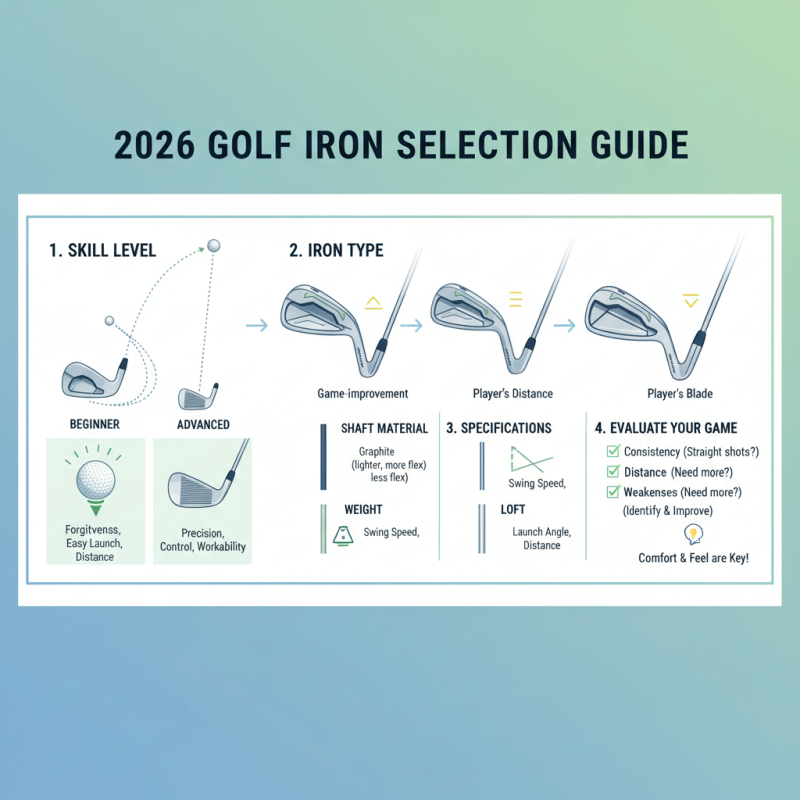
When selecting golf irons, consider your skill level and playing style. Beginners might favor more forgiving options, while advanced players often seek precision and control. The shaft material, weight, and loft also affect your swing and ball flight.
It's important to reflect on your current game. Are you consistently hitting straight shots? Do you struggle with distance? By evaluating your strengths and weaknesses, you can make an informed decision. Remember, the best golf irons for you may not be the most popular or expensive. Seek options that resonate with your playing preferences and feel comfortable in your hands.
Factors to Consider When Choosing Golf Irons
Choosing golf irons can be daunting. Several critical factors come into play. Understanding your skill level is essential. Beginners often require more forgiving clubs. Intermediate players might prefer a balance between control and forgiveness. Advanced golfers likely seek precise, performance-driven irons.
Weight and shaft flexibility also matter. Lighter clubs can improve swing speed. Stiffer shafts may offer better accuracy for skilled players. It’s crucial to test different weights and flexes to find what feels right.
**Tip:** Always get fitted. A professional fitting can reveal the specifications that suit you best.
Pay attention to the club's design. Cavity back irons provide stability and a larger sweet spot. Blades, on the other hand, offer enhanced control. Reflect on your playing style. Often, the best choice aligns with how you strike the ball.
**Tip:** Don’t rush your decision. Take time to practice with different clubs before purchasing. Experimenting will build confidence in your choice.
2026 How to Choose the Best Golf Irons for Your Game? - Factors to Consider When Choosing Golf Irons
| Factor |
Description |
Impact on Game |
| Skill Level |
Beginner, Intermediate, or Advanced players may require different iron types. |
Choosing the right level affects consistency and confidence. |
| Clubhead Design |
Cavity back, blade, or hybrid designs offer various benefits. |
Design influences forgiveness and control. |
| Shaft Material |
Steel or graphite shafts can change feel and performance. |
Material choice impacts flex and swing weight. |
| Loft |
Different loft angles affect distance and trajectory. |
Loft determination is crucial for achieving desired distances. |
| Grip Size |
Correct grip size enhances comfort and control. |
Improper size may lead to inconsistent swings. |
| Price Range |
Cost of irons varies widely depending on technology and materials. |
Budget can limit options but quality should not be compromised. |
Understanding Different Types of Golf Irons
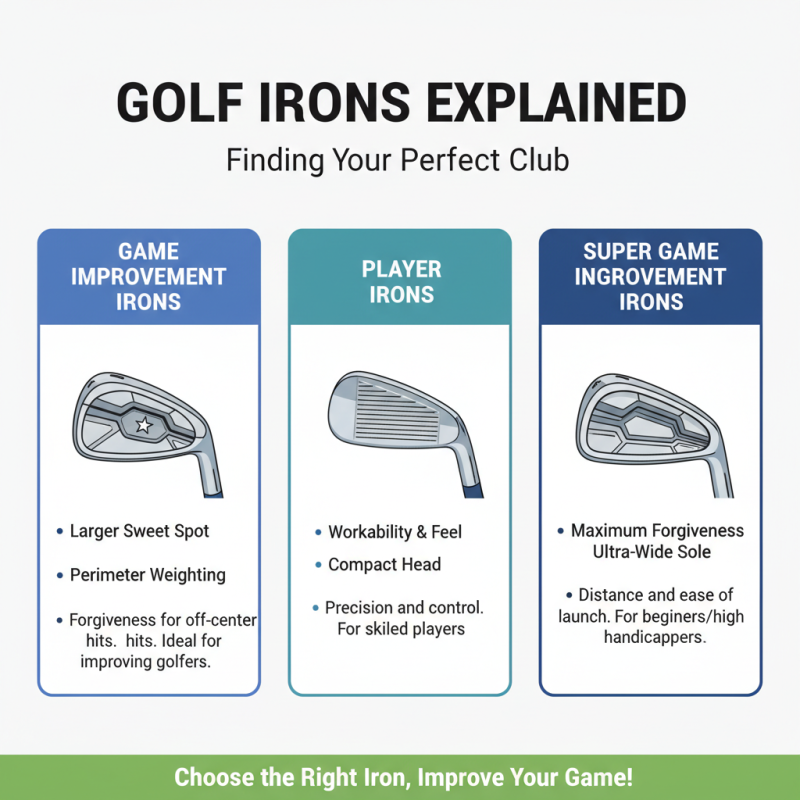
Selecting the right golf irons is crucial for improving your game. Different types of irons cater to varying skill levels and playing styles. Typically, there are three categories: game improvement, players, and super game improvement irons. Game improvement irons often feature a larger sweet spot and perimeter weighting, making them ideal for golfers seeking forgiveness on off-center hits.
Data shows that over 70% of golfers prefer game improvement irons due to their ease of use. Conversely, players' irons are designed for better control and trajectory. They appeal to more experienced golfers who prioritize shot-making capabilities over distance. Super game improvement irons further support beginners with increased launch angles and reduced spin.
Tip: Assess your current level and swing characteristics before making a choice. Understand your needs, whether it’s distance or accuracy. Another factor to consider is the shaft material, which can significantly impact performance. Steel shafts often provide better control, while graphite shafts offer more distance and less weight. Remember, the perfect iron for you might not be the latest model but the one that complements your playing style.
Assessing Shaft Flexibility and Material Options
When choosing golf irons, understanding shaft flexibility and material options is crucial. The shaft's flexibility affects how the club performs. A study from the National Golf Foundation shows that players using the correct shaft flex improve their accuracy and distance by up to 15%. Shaft flexibility typically ranges from stiff to extra stiff. Newer players may benefit from a more flexible shaft, while advanced players often prefer stiffer options for control.
Material is another important factor. Steel shafts are popular among better players for consistent feel and feedback. Conversely, graphite shafts offer lighter weight and more power. Research indicates that golfers can increase swing speed by 2-4 mph with a lighter graphite shaft. This change can lead to greater distance but may lack the control that steel provides.
Tips: Focus on your swing speed when choosing shaft flex. Get fitted for a club to identify your optimal specs. Don’t hesitate to test various options at a local pro shop. Track your performance over time to see what works best for your game. It's essential to reflect on your choices, as ongoing changes in your swing can affect your shaft selection.
Comparison of Golf Iron Shaft Flexibility Options
Evaluating Clubhead Design and Technology
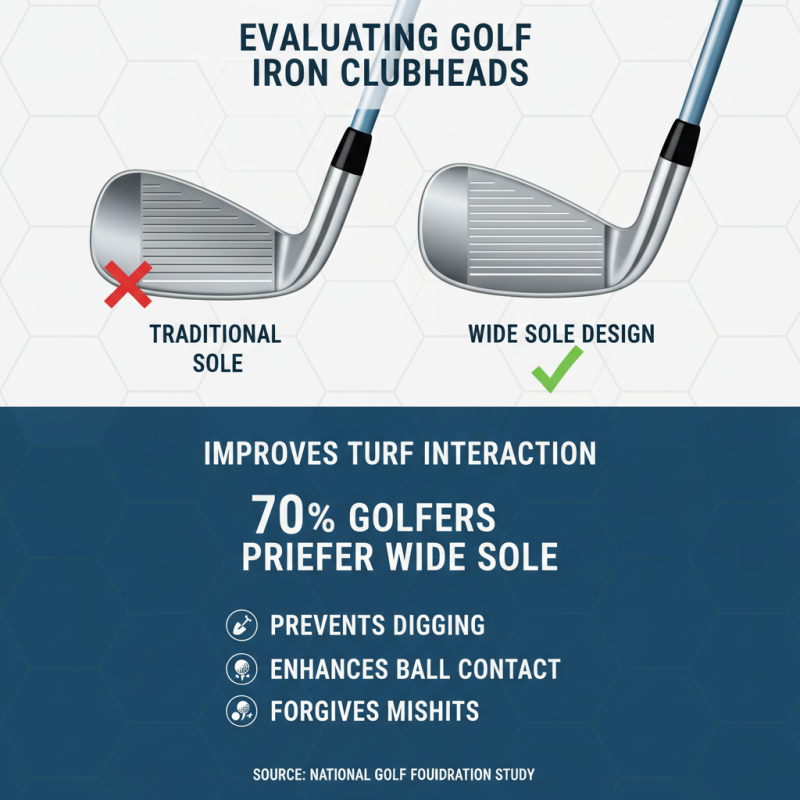
When evaluating golf irons, clubhead design is crucial. The shape of the clubhead affects performance significantly. A study published by the National Golf Foundation emphasizes that over 70% of golfers prefer a wider sole design. This design improves turf interaction. A larger width can prevent digging and enhance ball contact, especially on mis-hits.
Another key aspect is the material used in clubhead construction. Modern irons often incorporate advanced materials like titanium and stainless steel. A report from the Golf Equipment Manufacturers Association states that these materials can increase durability and performance. For example, a thin face design can increase ball speed, providing added distance even on off-center strikes.
However, not all players benefit equally from these innovations. Beginners might struggle with technology-heavy clubs. Higher handicappers often need forgiveness over low CG (center of gravity) technology. They may find it challenging to hit a more compact, premium design. Selecting the right clubhead involves understanding your game, swing speed, and shot consistency. Each golfer's needs are unique. This makes personal trial and professional advice essential in finding the best fit for your game.
Finding the Right Set Composition for Your Skill Level
Choosing golf irons can be a daunting task, especially considering your skill level. The right set composition significantly impacts your game. Beginners typically benefit from more forgiving clubs. These irons often have larger sweet spots. This characteristic makes it easier to achieve better strikes. Intermediate players might seek a balance between control and distance. They may prefer clubs that offer both performance and playability.
Tips: Consider your usual playing conditions. If you play on varied terrains, look for versatile irons. Additionally, account for your physical strength and swing speed. Lighter clubs can help generate more speed. However, they might sacrifice some control. Reflect on your recent rounds. Are you missing the greens often? It could signal the need for a more forgiving set.
Advanced players should focus on precision. They might want to try irons with a lower launch angle. This helps with distance control, especially on approach shots. Yet, it’s crucial to avoid clinging to outdated equipment. Technology evolves, and so should your gear. Existing clubs might not cater to your growing capabilities. Frequent self-assessment can guide your choices.