Why Choose Golf Irons for Your Golf Equipment Business?
Choosing the right products can shape a golf equipment business. Golf irons remain essential because they serve beginners, club golfers, and experienced players. Their role is clear: controlled distance, reliable contact, and practical scoring support.
A well-selected iron range can strengthen a retailer’s product mix. Customers often compare loft gaps, shaft materials, clubhead designs, and forgiveness levels. During a demo session, details become easier to judge. A player may notice the difference between a soft strike and a harsh vibration immediately. Launch monitor data can confirm carry distance, ball speed, and dispersion. Still, numbers should not replace professional fitting experience.
Fit matters greatly. A taller player may need different specifications, while a slower swing often benefits from lighter shafts. Retail teams should understand lie angles, shaft flex, offset, and cavity-back construction. They should also verify supplier quality, warranty terms, and consistency across each set. Trusted manufacturers usually provide testing information and fitting guidance, but every claim deserves careful review.
Not every popular model suits every customer. That is easy to forget. Stocking decisions should reflect local playing habits, price expectations, and return patterns. A compact head may attract skilled golfers but discourage beginners. A forgiving design may sell well, yet its performance depends on proper fitting. This is where practical product knowledge builds trust. A business that explains limitations honestly can create stronger relationships and more confident purchases. Golf irons are not merely another catalog item. They are a measurable, hands-on opportunity to improve customer value and long-term credibility.
Define the Iron Category: The USGA 14-Club Equipment Limit
For a golf equipment business, irons deserve careful attention because they cover many scoring distances. Under the USGA Rules of Golf, a player may carry no more than 14 clubs during a round. This limit includes every club in the bag, not only irons. There is no required number of irons, however. A golfer may choose fewer irons and add wedges, a hybrid, or another specialty club. That flexibility makes iron selection a fitting decision, not merely a set-number decision.
A typical iron set might run from a 5-iron to a pitching wedge. Loft gaps should create useful distance gaps between clubs. A seven-iron can look attractive on a sales page, but its loft may differ greatly between models. That can confuse buyers. Businesses should publish loft, shaft length, lie angle, and offset. These details help customers compare equipment honestly. Launch monitor testing can also reveal carry distance, peak height, and stopping power. Numbers matter.
The 14-club rule also affects how sellers discuss set composition. Carrying too many clubs during a round can lead to penalties under the Rules of Golf. Staff should encourage customers to check current guidance from an official golf authority. A practical mistake is assuming every golfer needs a complete iron range. Some players need simpler spacing, especially when long irons overlap with hybrids. Others want tighter distance control near the green. The best recommendation may feel less impressive on paper. It can still perform better on the course.
Why Choose Golf Irons for Your Golf Equipment Business?
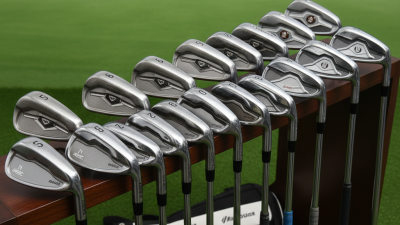
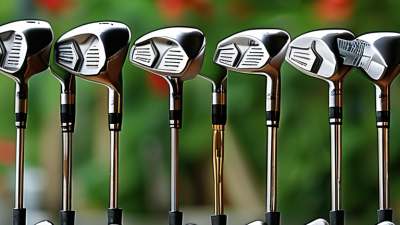
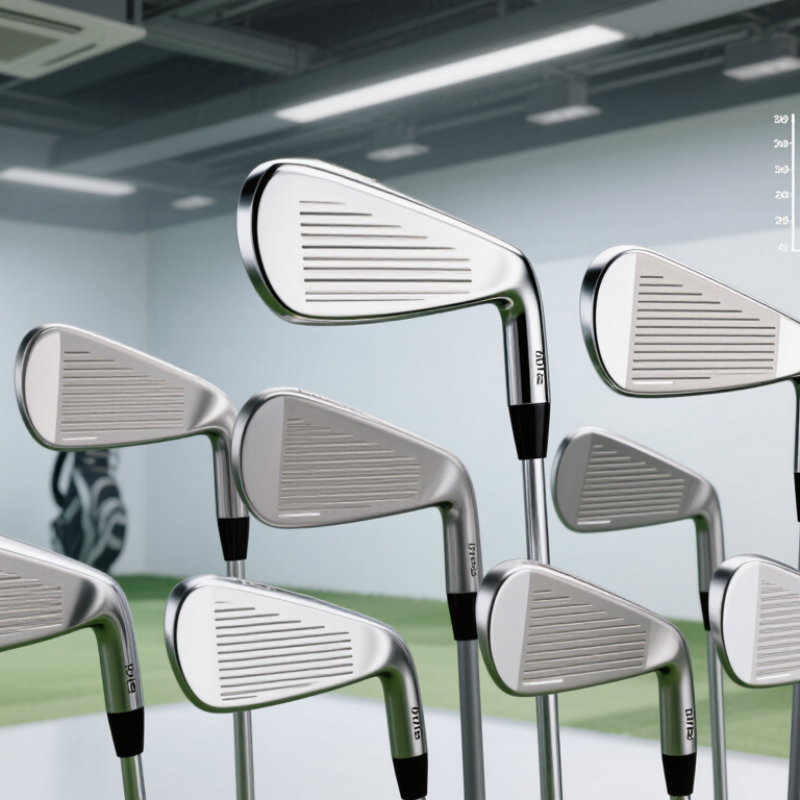
Under USGA Rule 4.1b, a player may carry no more than 14 clubs during a round. This illustrative 14-club setup includes six irons, showing why irons remain a substantial and essential category within a complete golf equipment offering. The rules do not require a specific club mix; players may select their own combination.
Measure Global Demand: 66.6 Million Golfers in 206 Countries (R&A, 2023)
Why Choose Golf Irons for Your Golf Equipment Business?
The global golf market offers a broad customer base for iron-focused equipment businesses. The R&A reported 66.6 million golfers across 206 countries in its Golf Around the World 2023 report. This figure includes both established markets and developing golf regions. It signals wide geographic demand, but participation numbers do not guarantee equal purchasing power.
Irons remain practical because golfers use them across many shots, courses, and skill levels. They also require regular fitting as players improve or change swing patterns. In the United States, the National Golf Foundation recorded 26.6 million on-course golfers in 2023. That creates a measurable market for sets, replacement clubs, and custom specifications. Still, a global golfer count can hide important differences. Climate, income, course access, and local playing habits affect sales. A standard product plan may fail outside its original market.
Tips: Use regional data before setting inventory levels. Offer clear iron specifications, including loft, shaft options, and forgiveness. Test demand with small shipments first. Track returns and fitting feedback carefully. These details reveal whether interest is genuine or only seasonal. Retailers should also compare participation growth with equipment spending reports, because more golfers do not always mean more premium purchases. A modest, evidence-based launch is often safer than copying another market.
Segment Buyers by Skill, Handicap, Swing Speed, and Fitting Needs
Why Choose Golf Irons for Your Golf Equipment Business?
Golf irons serve different players, so one product range cannot fit every buyer. The R&A’s Golf Around the World 2023 report recorded 66.6 million golfers across 206 countries. The National Golf Foundation’s 2024 report counted 28.1 million on-course participants in the United States during 2023. These figures show a broad market, but participation alone does not explain purchasing needs.
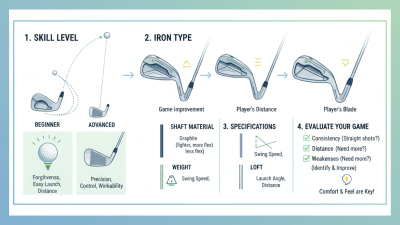
Segment buyers by skill and handicap.
Beginners often need forgiving irons, wider soles, and clear distance gaps. Mid-handicap players may value consistent launch and improved turf interaction. Low-handicap golfers usually seek tighter dispersion, workable flight, and precise feedback. Handicap helps, but it is not perfect. Two players with the same handicap can swing very differently.
Swing speed adds another useful filter. Slower swingers may benefit from lighter shafts and easier-launching heads. Faster swingers often need stable shafts, stronger control, and reliable distance spacing.
Fitting data should include launch angle, ball speed, strike location, and carry distance. A fitting report from the National Golf Foundation highlights equipment customization as an important part of modern golf retail. However, retailers should avoid selling speed alone. A faster swing does not always mean a better fit.
Use simple questions in the sales process. What is the player’s handicap? Where do misses land? Does the player prefer height or control? A neat segmentation model can still fail in-store. Real golfers often change their answers after hitting five shots.
Compare Iron Types Using Launch, Forgiveness, Distance, and Control Data
Why Choose Golf Irons for Your Golf Equipment Business?
Golf irons remain valuable because buyers can compare measurable performance, not just appearance. In fitting sessions, I test
launch angle, peak height, carry distance, ball-speed retention, and dispersion.
A stronger iron may produce more distance, but its lower launch can reduce stopping power. A traditional blade often offers precise feedback and workable flight. However, mishits lose more speed and finish farther from the target.
Cavity-back irons usually balance forgiveness and control. Larger game-improvement heads can protect distance across the face, especially on toe strikes. Still,
“forgiving” should include direction, not only ball speed.
Compare the same loft, shaft length, and ball. Loft gaps can make one iron appear faster than another. My testing notes are useful, but they are not perfect. Wind, strike location, and swing fatigue can distort results.
Tips:
Record carry distance, not total distance, and measure left-right dispersion. Check five centered shots and five moderate mishits. Ask whether the launch window fits the player’s typical course conditions. A high-launching iron may suit firm greens differently from a low-launching model. Store buyers should present both numbers and limitations clearly.
That honesty builds trust.
Build a Profitable Iron Assortment Around R&A and USGA Equipment Standards
Why Choose Golf Irons for Your Golf Equipment Business?
Build a Profitable Iron Assortment Around R&A and USGA Equipment Standards
Golf irons deserve a central place in a serious equipment business. They influence distance control, launch height, and scoring confidence. A well-planned iron assortment can serve beginners, improving players, and experienced golfers. It can also reduce slow-moving inventory. However, profit starts with compliance, not attractive packaging.
Use the R&A and USGA Equipment Rules as your quality foundation. Before listing any iron, verify its current conforming status through official equipment resources. Review clubhead design, grooves, markings, and performance limits. Then organize stock by loft, shaft flex, set length, and player ability. A compact set may suit a new golfer. A wider loft range may support custom fitting. Keep the gaps consistent. Customers notice.
Reliable sourcing requires more than checking a specification sheet. Ask suppliers for updated test records and clear product measurements. Record loft, lie, shaft weight, and swing weight for every sample. Small differences can affect fitting advice and customer expectations. I have learned that a polished product chart can still hide practical gaps. Actual testing remains valuable. Review returns, fitting notes, and customer feedback each season. If one iron produces repeated complaints, investigate before expanding its stock. That honest review may reduce short-term sales, but it protects trust and supports a more dependable assortment.