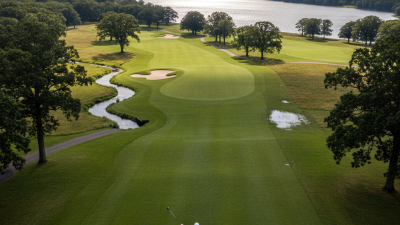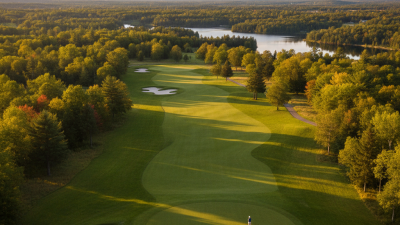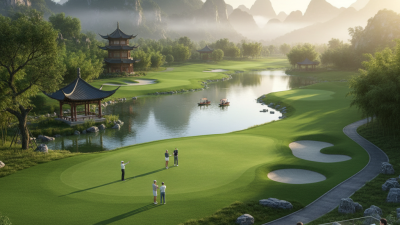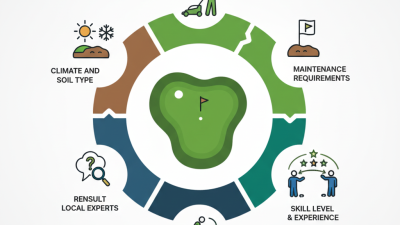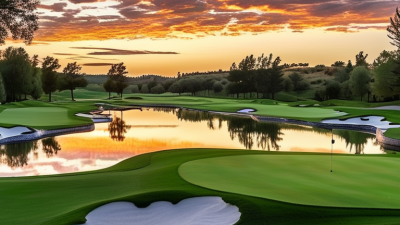
Choosing a championship golf course for your project means investing in more than manicured fairways. It means creating a destination with identity, challenge, and lasting appeal. A well-designed course can shape the surrounding development, guide residential planning, and strengthen the visitor experience. Its influence begins at the first tee, where sightlines reveal lakes, bunkers, native grasses, and carefully framed greens.
Golf course architect Robert Trent Jones Jr. once said, “A golf course should be a journey, not a destination.” That idea remains highly relevant for modern projects. A championship golf course should lead players through changing terrain, strategic decisions, and memorable viewpoints. It should also respect the land. Experienced architects study soil, drainage, wind patterns, water use, and local ecology before drawing the final routing. Small details matter, including shaded walking paths, firm playing surfaces, and maintenance access that does not disrupt guests.
The benefits are practical. A credible championship golf course can attract tournaments, members, tourists, hospitality investment, and long-term community interest. Yet prestige alone is not enough. Poor planning can create expensive irrigation demands, difficult maintenance, or a course that feels impressive but plays awkwardly. That is the uncomfortable part. A project must question its assumptions early.
The strongest developments balance ambition with evidence. They use qualified consultants, realistic operating models, and measurable environmental goals. When design, business, and stewardship work together, the golf course becomes more than an amenity. It becomes the project’s living signature.
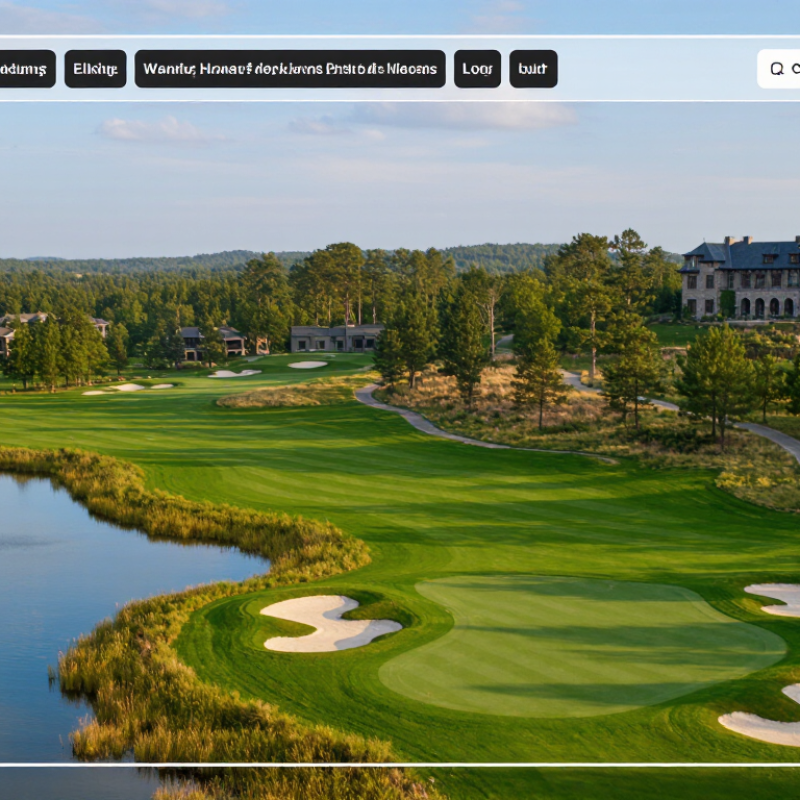
A championship golf course is not simply a long, expensive layout. There is no universal legal definition. In practice, it is designed and tested for elite competition, with tournament-grade conditioning, strategic hazards, and flexible teeing options. The R&A’s Golf Around the World 2023 report recorded more than 43,000 golf facilities worldwide. That scale makes meaningful differentiation important, but prestige alone proves little.
Core features begin with a balanced routing, reliable drainage, consistent turf, and fair sightlines. Length is only one variable. Wind exposure, landing-zone width, green contours, recovery areas, and spectator movement also shape competitive quality. The National Golf Foundation reported 28.1 million on-course golfers in the United States in 2023. Therefore, a championship project should challenge professionals without excluding everyday players. A course may look dramatic yet play poorly when its greens are too severe or its maintenance budget is unrealistic. That is an uncomfortable design mistake.
Tips: Test several tee settings before final construction. Measure playability during wet and dry conditions. Review shot patterns, walking distances, and emergency access. Keep maintenance records, not just renderings. A respected course needs evidence. It also needs room for correction.
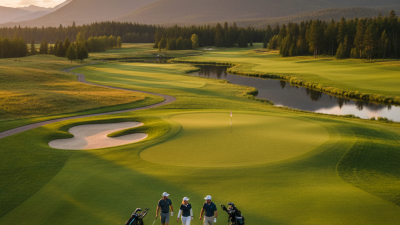
A championship golf course is designed to test accuracy, strategy, distance control, and consistency. Its core structure commonly follows an 18-hole, par-72 layout that balances different hole types and creates a demanding but engaging playing experience.
Reference basis: a representative 18-hole par-72 championship layout. Individual course designs may vary.
Evaluating Site Conditions, Design Goals, and Project Requirements
A championship golf course begins with a careful reading of the land. Experienced teams study soil layers, drainage paths, prevailing winds, sunlight, and existing vegetation. A low area may look attractive, yet it can collect water after heavy rain. That detail affects grading, turf selection, cart access, and long-term maintenance. Site surveys and geotechnical testing provide dependable evidence before major design decisions are made. Visual impressions alone are not enough.
Design goals should match the site rather than fight it. Some projects need dramatic elevation changes and strategic landing zones. Others require smooth circulation, family-friendly play, or limited water use. Designers can shape fairways around mature trees and natural contours when safety allows. They should also test sightlines from tees, greens, service roads, and viewing areas. Small errors become expensive later. An early concept may need revision after drainage modeling or soil testing reveals hidden constraints.
Project requirements control the practical outcome. The team must review budget, construction access, maintenance capacity, irrigation demand, scheduling, and local environmental standards. A course may look impressive on opening day but perform poorly without realistic upkeep planning. Maintenance staff should review mowing routes, storage areas, and equipment access before construction begins. This step is often underestimated. Even experienced teams can misjudge seasonal conditions, so field observations should continue throughout design development.
Choosing a championship golf course means planning beyond attractive fairways. Construction starts long before shaping begins. Surveyors map contours, groundwater, wind, and soil strength. Engineers coordinate drainage, irrigation, cart paths, and greens. Championship standards demand consistent surfaces, accurate slopes, and durable materials. Projects must also meet local planning, water, accessibility, and environmental requirements. Small errors become obvious during fast play. They become expensive later.
Costs depend on land conditions, earthmoving, water storage, turf selection, labor, and maintenance facilities. A remote site may need new access roads and utility extensions. Detailed quantity takeoffs are more reliable than broad cost-per-acre guesses. Budgets should include rock, weak soil, weather delays, and design revisions. Contingency is not waste. It protects decisions. Still, budgets often change. A drainage discovery can alter the entire estimate.
Development usually moves through feasibility, design, approvals, earthwork, installation, grow-in, and testing. Design and permits may take months. Earthwork can require a full season. Grow-in needs patience; greens cannot be rushed without risking weak roots and uneven coverage. Weekly inspections should record moisture, grades, compaction, and deliveries. Independent reviews improve accountability. The schedule may look clean on paper. Weather rarely agrees. A phased opening can reduce pressure, but it may disrupt play and revenue. Project teams should compare both outcomes before committing. That is the difficult part.
Why Choose a Championship Golf Course for Your Project?
A championship golf course demands more than attractive fairways and dramatic views. Environmental planning must guide the project from the earliest survey. Start with soil testing, drainage mapping, and a careful review of existing vegetation. Native grasses can reduce irrigation needs and support local habitats. However, they may create uneven playing conditions during establishment. That trade-off deserves honest discussion. Water storage, efficient irrigation zones, and runoff controls also protect nearby streams. Local rainfall patterns should shape the design, not assumptions from another region.
Operations become clearer when the course is planned around real movement. Maintenance vehicles need safe routes that avoid player areas and fragile slopes. Staff require practical access to pumps, drainage points, bunkers, and service buildings. Poor access increases labor, fuel use, and repair delays. A championship standard can expose small planning errors quickly. In my experience, a beautiful maintenance corridor is less valuable than a reliable one. It is easy to overlook. Maintenance planning should also include mowing schedules, turf recovery, pest monitoring, and seasonal renovation. Independent agronomic advice can test these decisions before construction begins.
Tips: Measure water demand during the driest month. Leave inspection access beside buried systems. Choose durable surfaces near maintenance entrances. Review the plan with grounds staff before approval. Their practical objections may prevent expensive changes. Not every feature needs to look perfect. Resilience usually matters more.
Assessing Environmental, Operational, and Maintenance Considerations
| Category | Assessment Dimension | Evidence-Based Benchmark or Data | Project Implication | Reference Basis |
|---|---|---|---|---|
| Environmental | Land requirement | An 18-hole course commonly requires approximately 120–180 acres, depending on terrain, safety buffers, wetlands, practice areas, and facility scope. | A championship-scale layout can preserve larger ecological corridors and stormwater areas, but it requires more land-use planning and habitat management. | Typical golf-course planning ranges; site-specific feasibility study required. |
| Environmental | Turf water demand | Turf irrigation is generally modeled from reference evapotranspiration multiplied by a turf crop coefficient commonly ranging from about 0.60 to 0.90, before effective rainfall is deducted. | Water budgets should be climate-specific and divided by playing surface, rough, native area, and landscape zone rather than using one site-wide rate. | FAO-56 evapotranspiration method and regional agronomic guidance. |
| Environmental | Rainfall capture potential | One inch of rainfall falling on one acre produces approximately 27,154 gallons of water before runoff, evaporation, and infiltration losses. | Basins, ponds, swales, and permeable drainage zones can convert rainfall into a supplemental irrigation source and reduce peak stormwater discharge. | Standard hydrologic conversion: 1 acre-inch ≈ 27,154 U.S. gallons. |
| Environmental | Irrigation distribution uniformity | A practical design objective for high-quality turf irrigation is a low-quarter distribution uniformity of approximately 0.75 or higher, with stronger performance preferred on greens and tees. | Higher uniformity reduces dry spots, overwatering, runoff, pumping demand, and unnecessary turf stress. | Landscape irrigation performance-evaluation practice. |
| Environmental | Native and low-input landscape areas | Replacing selected high-maintenance turf with regionally appropriate native vegetation can substantially reduce mowing and irrigation requirements, although the percentage reduction depends on climate and plant selection. | A championship project can use maintained turf only where play or safety requires it, while out-of-play areas support biodiversity and lower long-term inputs. | Water-wise landscape design and regional habitat-management principles. |
| Operational | Tee-time capacity | An 8–10 minute tee interval is commonly used for capacity planning. A 10-minute interval allows approximately 6 starting groups per hour before adjustments for weather, cancellations, and course restrictions. | The project should balance revenue capacity with surface recovery, pace of play, safety spacing, and maintenance access. | Golf-operations scheduling practice; actual capacity varies by layout and player profile. |
| Operational | Expected round duration | A full 18-hole round is commonly planned at approximately 4–4.5 hours, subject to course difficulty, walking or cart use, group size, and operating policy. | Routing, service locations, cart paths, and player-flow design should support consistent circulation without increasing turf wear. | Common course-operations planning range. |
| Maintenance | Putting-green mowing | Championship-style greens are often mowed daily during active growth periods, with cutting heights commonly maintained around 0.10–0.15 inch depending on grass type, weather, and performance goals. | The specification requires specialized equipment, skilled operators, careful moisture control, and sufficient daily maintenance windows. | Common high-performance putting-green maintenance practice. |
| Maintenance | Fairway and tee mowing | During active growth, tees and fairways are commonly mowed approximately 2–4 times per week, while rough areas may be maintained about 1–3 times per week. | More frequent mowing improves presentation and playability but increases labor, fuel or electricity use, equipment wear, and scheduling pressure. | Typical turf-maintenance frequency ranges; climate and growth rate are controlling factors. |
| Maintenance | Integrated pest management | Integrated pest management uses monitoring, identification, cultural controls, thresholds, and targeted treatment rather than routine calendar-based chemical applications. | A documented pest-management plan can lower unnecessary applications, protect water quality, and provide a clear compliance record. | Integrated pest-management principles used in professional turf management. |
| Maintenance | Maintenance access and recovery time | Daily maintenance may include mowing, irrigation inspection, bunker preparation, divot repair, equipment movement, and agronomic monitoring; exact labor hours vary by acreage and service level. | The design should provide separated service routes, equipment storage, wash-down facilities, drainage controls, and early-morning maintenance access. | Operational planning principle for high-maintenance sports turf facilities. |
| Lifecycle | Performance versus maintenance intensity | Lower mowing heights, tighter surface tolerances, and higher presentation standards generally increase irrigation precision, mowing frequency, pest monitoring, and recovery requirements. | A championship course should be selected when the project can sustain long-term agronomic, operational, and maintenance commitments—not only initial construction quality. | Established relationship between turf-performance targets and maintenance inputs. |
Note: The ranges shown are planning benchmarks rather than universal requirements. Final values should be validated against local climate, soil conditions, water availability, regulatory requirements, grass species, course routing, and the intended level of play.
A championship golf course should be judged beyond opening-day appeal. Its long-term value appears in daily play, reliable operations, and community use. Players notice firm greens, predictable drainage, safe paths, and thoughtful practice areas. These details shape confidence, pace, and repeat visits.
Owners need evidence, not prestige alone. A professional feasibility study should examine construction costs, water demand, maintenance hours, staffing, and seasonal revenue. Durable turf systems and efficient irrigation can reduce operating pressure over many years. However, lower water use does not always mean lower cost. Soil conditions, climate, and maintenance expertise still matter. Small design errors can become expensive repairs.
Communities measure value differently. A well-planned course can support local employment, attract visitors, preserve open space, and improve nearby property conditions. Public access, junior programs, and walking routes can widen those benefits. Local consultation also reveals concerns about traffic, water, and noise before construction begins. That step is often underestimated. Reliable results require transparent budgets, independent environmental reviews, and performance records after opening. A championship standard is useful only when it serves real users, survives practical testing, and remains financially responsible.