
Choosing a supplier for club championship golf is not simply a price comparison. The right partner must turn detailed requirements into consistent products, deliver them reliably, and communicate clearly when something changes. A glossy catalog helps, but it cannot show whether a sample’s finish, weight, or grip matches the final order. Small differences matter.
Golf-club designer Tom Wishon has emphasized, “There is no such thing as a standard golf club.” That principle matters when evaluating Chinese suppliers: confirm specifications, materials, customization options, and quality checks before committing. Ask for a sample. Inspect the clubhead, shaft, grip, and finish in person where possible. Then compare the sample with the written specification, not just the sales images. Details count.
This guide explains how to identify potential manufacturers, assess their experience, and verify production capabilities. It also covers questions to ask about prototypes, lead times, packaging, communication, and after-sales support. Request clear evidence, such as product records or inspection procedures, and keep important decisions in writing. A confident sales conversation is useful, but it is not proof of consistent manufacturing. I would not treat one successful sample as a guarantee; that assumption deserves a second look. Careful checks take time. They can prevent avoidable surprises and help buyers choose a supplier suited to their club championship golf needs.
Before contacting suppliers in China, define exactly what your club championship needs. List each product, such as embroidered caps, towels, bag tags, scorecard holders, or awards. Record quantities, sizes, colors, materials, and personalization details. Be precise. “Navy” can mean different shades. Include artwork files, logo placement, and any size limits. A clear specification helps suppliers quote comparable products and reduces avoidable sample changes.
Tips: Request a physical sample before approving a large order. Check stitching, print placement, fabric feel, and color under natural light. Confirm packaging, delivery dates, and how damaged items will be handled. Put approved details in writing. Small checks now can prevent a disappointing delivery later.
Set quality standards that match how the products will be used. Towels need sturdy hems; bag tags should be readable and easy to attach. Ask how materials and customization will be checked, and request production photos when appropriate. Compare the quote with the specification, not just the unit price. A polished sample can still differ from bulk production, so keep that risk in view. Some details may need revision after testing; that is useful feedback, not a failure.

China’s golf supply network is spread across several manufacturing regions, not one single hub. Guangdong, particularly the wider Dongguan and Shenzhen area, offers access to metalworking, plastics, textiles, and export services. These capabilities can support different stages of club and accessory production. Still, a factory’s location does not prove its quality.
Zhejiang, including Ningbo and nearby industrial cities, has broad sporting-goods and component manufacturing capacity. Fujian is worth exploring for sewn products, bags, and related accessories. Suppliers may source materials from outside their own province, so ask where club heads, shafts, grips, and bags are actually made. Details matter. A trading office and a production site can have different addresses.
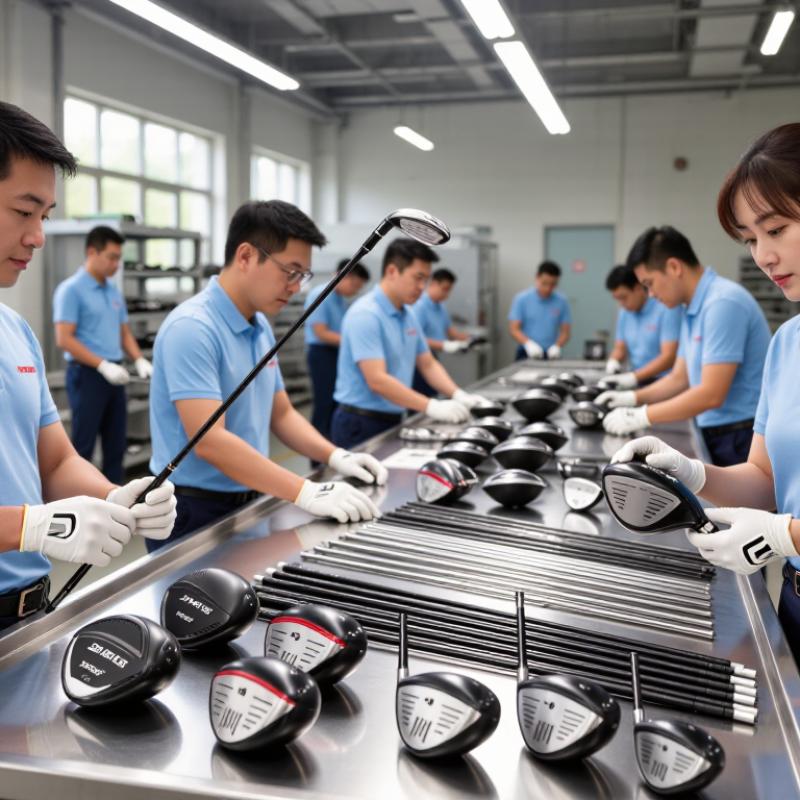
Use regional knowledge to build a shortlist, then verify each supplier directly. Request a live factory walkthrough, recent production photos, and samples from the same process used for bulk orders. Ask how the supplier checks shaft alignment, finish consistency, and grip installation. These are observable checks, not just sales claims. Compare the sample with written specifications before approving production. Maps can help narrow the search, but they simplify a complex supply chain. That part is easy to overlook.
Identify major golf supply regions and manufacturing hubs. The chart shows regional sourcing presence, not supplier counts or production volume.
Guangdong’s Pearl River Delta is a key area to investigate for golf equipment and accessories. Fujian and Zhejiang have broader sportswear, footwear, and sporting-goods manufacturing bases that may support golf-related sourcing. Confirm each supplier’s golf-specific experience, product range, and factory capabilities directly.
A strong club championship golf supplier should understand more than basic club assembly. Ask how long the team has produced tournament-grade equipment and which production steps it handles directly. Request examples of comparable orders, such as matched club sets or custom grip specifications. Clear answers matter. A polished catalog alone proves little. Check whether staff can explain lead times, sample approval, and how they address defects. If answers stay vague, keep comparing.
Quality standards should be visible in the process. Ask for written inspection criteria, material specifications, and sample checks before production. Examine clubheads for consistent finish, shafts for straightness, and grips for secure fitting. Request recent inspection records where available, and confirm how measurements are checked across a full batch. The product range also deserves close review: a supplier may offer drivers, irons, wedges, putters, and accessories, but broad choice is useful only when specifications stay consistent. One easy mistake is focusing on variety and overlooking replacement-part availability. It is worth reconsidering.
Tips: Compare two or three physical samples under the same lighting. Note weight, finish, and feel in a simple checklist. Ask whether the supplier can support small revisions before confirming a large order. Save written specifications, and do not rely on memory; details can slip.
A strong golf club supplier should provide samples that match the intended materials, finish, and specifications. Request a production sample, not just a showroom piece. Check grip alignment, head finish, shaft labels, and packaging under good light. Small details matter. If possible, compare several units from the same sample batch. A single polished item may not represent routine production.
Get an itemized quotation covering tooling, packaging, shipping terms, minimum order quantity, and payment schedule. Compare like with like; a low unit price can hide added costs. Ask how prices change with order volume and material choices.
Request recent production schedules and a capacity breakdown, including monthly output and current lead times. A factory visit or live video walkthrough can help confirm equipment and workflow, though neither guarantees consistent quality. No check is perfect.
Record agreed specifications, inspection points, and remedies for defects in writing. Even experienced buyers can overlook a detail, so leave time for a pre-shipment inspection and a final review of sample-to-order consistency.
When comparing Chinese suppliers for club championship golf products, start with the same written specification for each candidate. Note materials, dimensions, finish, packaging, and acceptable tolerances. Ask whether the factory makes the products itself or coordinates outside workshops. Small details matter. A polished sample can hide inconsistent production, so request samples from a normal production run and inspect them under consistent lighting. Check clubhead alignment, shaft finish, grip fit, and packaging before discussing price alone.
Tips: Ask for recent inspection records, production capacity, and a clear sample timeline. Request photos or video of relevant equipment and workstations. Confirm who handles defects and replacements, and put agreed specifications in writing. A quick reply is useful, but it does not prove reliable quality.
A dependable partner should explain how it controls materials and checks finished goods. Compare lead times, minimum order quantities, communication quality, and willingness to flag production risks. If possible, arrange a third-party factory assessment or independent pre-shipment inspection. One awkward point deserves attention: the lowest quote may still be reasonable, but unclear costs can make comparisons misleading. Ask for a detailed quotation covering tooling, samples, packing, and freight assumptions. Keep approval samples and inspection criteria on file before authorizing a larger order. A short video call can reveal whether answers come from production staff or only sales.
| Evaluation Criterion | Suggested Weight | What to Compare | Evidence to Request | Selection Guidance |
|---|---|---|---|---|
| Product Engineering and Customization | 15% | Experience with the required club type, head design, shaft options, grip, finish, and custom specifications. | Technical drawings, product specifications, development process, and examples of comparable work with confidential details removed. | Prefer a supplier that can explain design feasibility, identify technical risks, and confirm specifications in writing before sampling. |
| Quality Management | 15% | Documented inspection procedures for incoming materials, in-process production, and finished goods. | Quality manual or process overview, inspection records, defect-handling procedure, and any current quality-system certificate for verification. | Check that the certificate, if presented, applies to the actual manufacturing site and is current; do not treat certification alone as proof of product quality. |
| Material Traceability | 12% | How materials and components are specified, inspected, and linked to production batches. | Material specifications, supplier or batch records, incoming inspection criteria, and sample test reports where applicable. | Choose a supplier that can trace key materials and components to a production lot and disclose substitutions before production. |
| Production Capability | 12% | In-house processes versus subcontracted work, available equipment, production planning, and capacity for the requested order. | Factory audit or video walkthrough, process flow, equipment list, capacity explanation, and disclosure of outsourced processes. | Verify that the proposed production site can perform the critical processes and that subcontracting is controlled and approved. |
| Sample and Pre-Production Approval | 10% | Sample lead time, revision process, sample charges, and controls used to match approved samples in bulk production. | Written sample plan, agreed specification sheet, sample evaluation record, and signed or otherwise documented pre-production approval. | Approve a representative sample against written criteria before authorizing the full order; retain a reference sample where practical. |
| Rules and Market Compliance | 10% | Whether the intended club configuration is suitable for the buyer’s target market and use, including competition requirements where relevant. | Product dimensions and specifications, test documentation if applicable, and confirmation of the process for checking current governing-body requirements. | For competition use, verify the final club model and configuration against the current rules and equipment resources of the relevant governing body. Do not rely on a general claim of compliance. |
| MOQ, Pricing, and Cost Transparency | 8% | Minimum order quantity, unit-price breaks, tooling or setup charges, packaging costs, payment terms, and quotation validity. | Itemized quotation with currency, Incoterm, included services, excluded costs, payment schedule, and terms for tooling ownership. | Compare quotations on the same specification, order quantity, packaging, and delivery basis; investigate unusually low prices and unclear charges. |
| Lead Time and Delivery Planning | 6% | Separate timelines for sampling, tooling, production, inspection, and shipment, plus the supplier’s process for handling delays. | Order schedule, production milestones, capacity confirmation, and written delivery terms. | Use a milestone-based schedule and confirm how schedule changes will be communicated. Treat quoted lead times as order-specific, not universal. |
| Communication and Documentation | 5% | Response clarity, technical understanding, English-language documentation, and willingness to record decisions and revisions. | Written answers to a technical questionnaire, version-controlled specifications, and a designated project contact. | Favor precise, consistent communication and written confirmation over verbal assurances. |
| After-Sales and Corrective Action | 7% | Process for reporting defects, investigating root causes, agreeing corrective actions, and handling replacement or credit requests. | Written warranty or claims terms, defect-reporting procedure, and a sample corrective-action report with confidential information removed. | Agree on inspection criteria, claim deadlines, required evidence, and remedies in the purchase contract before placing an order. |
| Total Suggested Weight | 100% | Score each prospective supplier against the same evidence-based criteria. Verify legal business details, the manufacturing site, references, and contractual terms before selecting a partner. | ||