
Choosing the Best Fountain Contractors Worldwide requires more than comparing attractive project photographs. A fountain may sparkle in a presentation, yet fail under wind, mineral-heavy water, or constant public use. Experienced Fountain Contractors understand these hidden pressures. They study the site, test water conditions, review drainage, and calculate pump capacity before recommending a design. Their work should combine artistic control with reliable engineering.
Mark Fuller, founder of WET, a leading fountain design firm, has said, “Water is the most powerful element in nature.” This idea matters when evaluating contractors. Skilled teams do not treat water as decoration alone. They shape movement, sound, lighting, safety, and maintenance into one coordinated system. Ask for documented experience with similar climates, project sizes, and operating schedules. A resort fountain in Dubai faces different demands than a public plaza in Copenhagen.
Look closely.
Request references, maintenance records, material specifications, and realistic completion schedules. Confirm who handles waterproofing, electrical integration, filtration, and seasonal servicing. Clear answers often reveal professional discipline. Vague promises do not.
A strong contractor also communicates limitations honestly. Perhaps the original concept needs smaller jets, better access panels, or a quieter pump room. That is not failure. It may prevent expensive repairs later. I have found that the most impressive proposal is not always the safest choice. Some portfolios hide maintenance problems behind polished images. Reliable selection depends on evidence, technical questions, and local compliance. The best partnership feels practical, transparent, and durable long after the opening ceremony ends.
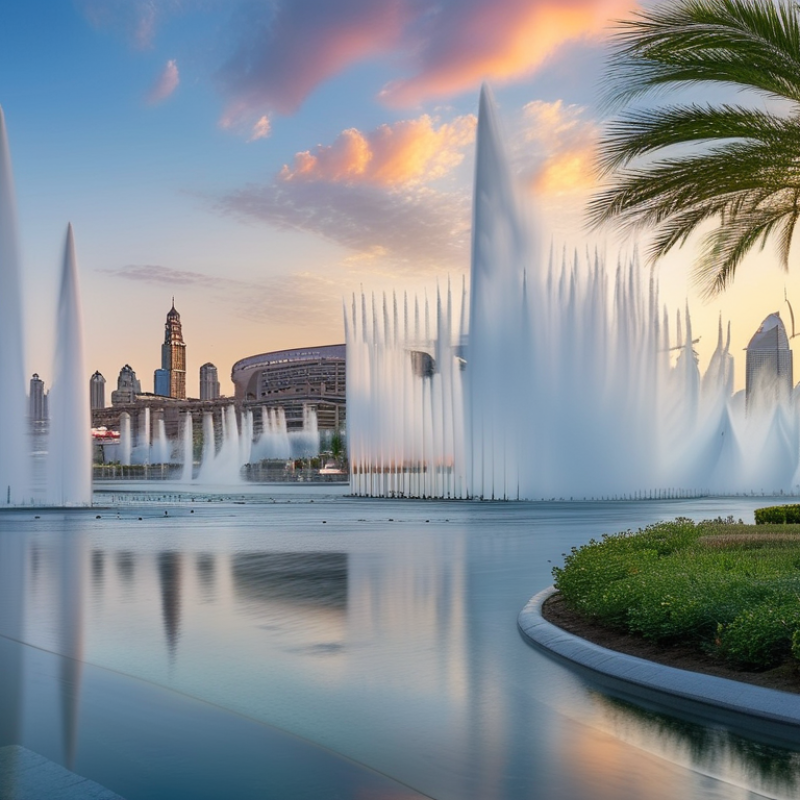
Defining project goals is the real starting point when choosing fountain contractors worldwide. Decide what the fountain must achieve: visual drama, visitor comfort, cultural identity, or quiet reflection. A hotel entrance may need a narrow, elegant sheet of water. A public plaza may require stronger lighting, safer edges, and controlled spray. Measure the site carefully. Record wind direction, sunlight, drainage, water access, and nearby noise.
Water and energy targets should be written before contractor interviews. The U.S. Environmental Protection Agency reports that household leaks waste nearly 1 trillion gallons of water annually in the United States. Closed-loop fountain systems can reduce unnecessary consumption, but evaporation and maintenance still matter. The 2023 UNEP Global Status Report for Buildings and Construction states that buildings consume about 34% of global energy. This makes efficient pumps, timers, filtration, and LED lighting practical design priorities. The figures are broad, not fountain-specific. That limitation deserves attention.
Tips: Create a one-page project brief with dimensions, operating hours, water-quality expectations, accessibility needs, and maintenance limits. Ask each contractor for measured flow rates, pump efficiency data, cleaning schedules, and lifecycle costs. Request drawings showing splash zones and service access. Do not judge proposals by appearance alone. A beautiful basin can become difficult to maintain. I have seen projects overlook winter drainage and equipment access. Those details often create larger costs than expected. Teams should also check local water rules, electrical standards, and climate conditions with qualified professionals.
Choosing a fountain contractor worldwide requires more than attractive photographs. Experience appears in the details: accurate site measurements, stable foundations, quiet pumps, safe electrical planning, and drainage that handles heavy rain. Ask how many similar fountains they have completed and whether those projects still operate well after several years.
Expertise should match your location and project type. A skilled contractor understands water pressure, filtration, stone movement, lighting, and seasonal maintenance. They should explain technical choices in plain language, not hide behind impressive terminology. Request project references, inspection records, and evidence of completed work. Speak with previous clients when possible. Their comments may reveal delays that a polished proposal does not.
Study the portfolio carefully. Look for consistent construction quality, close-up details, nighttime views, and projects with similar scale. A dramatic image can hide uneven edges or excessive splash. Ask for drawings, maintenance schedules, and a clear breakdown of responsibilities. Reliable professionals also discuss limitations honestly, including noise, evaporation, access, and future repair costs. No portfolio is perfect. That is useful. A contractor who admits one weak decision and explains the correction may be more trustworthy than one claiming flawless results. Personally, I would value a modest, well-maintained courtyard fountain over a spectacular installation with uncertain service support. References, documentation, and open answers provide stronger evidence than visual impact alone.
| Evaluation Dimension | Weight | Recommended Benchmark | What to Verify | Scoring Guidance | Priority |
|---|---|---|---|---|---|
| Relevant Experience | 20% | At least 8 years of fountain design, engineering, installation, or maintenance experience. | Business history, project completion records, references, and evidence of comparable installations. | 5 = 15+ years and extensive comparable work; 3 = 8–14 years; 1 = under 5 years. | High |
| Comparable Project Portfolio | 18% | At least 3 completed projects similar in scale, water effect, environment, and operating requirements. | Project photographs, drawings, completion dates, project scope, client references, and operating results. | 5 = 5 or more highly comparable projects; 3 = 3–4 projects; 1 = no directly comparable work. | High |
| Technical Engineering Capability | 15% | Demonstrated ability to produce hydraulic calculations, electrical layouts, control logic, and structural coordination. | Sample calculations, design drawings, pump schedules, control-panel specifications, and method statements. | 5 = complete multidisciplinary documentation; 3 = partial documentation; 1 = relies mainly on external design support. | High |
| Water Treatment and Safety | 12% | Documented approach to filtration, disinfection, chemical handling, slip prevention, electrical protection, and public safety. | Water-quality plan, maintenance procedures, risk assessment, emergency shutoff design, and applicable local compliance documents. | 5 = documented and project-specific system; 3 = standard system with limited customization; 1 = unclear safety process. | High |
| International Delivery Capability | 10% | Experience coordinating export documentation, local regulations, customs, installation teams, and time-zone communication. | International project references, shipping procedures, local partner arrangements, language coverage, and commissioning plans. | 5 = completed projects in multiple regulatory regions; 3 = some international experience; 1 = domestic-only delivery history. | High |
| Installation and Commissioning | 10% | Clear installation sequence, testing procedure, training plan, commissioning checklist, and handover documentation. | Installation schedule, factory acceptance test procedure, site acceptance test procedure, as-built drawings, and operator training records. | 5 = complete documented process; 3 = basic process; 1 = responsibilities remain undefined. | High |
| Maintenance and After-Sales Support | 8% | Defined preventive-maintenance schedule, spare-parts plan, response procedure, and remote or on-site support options. | Maintenance intervals, service coverage, spare-parts lead times, troubleshooting process, and support contact structure. | 5 = detailed lifecycle support with measurable response commitments; 3 = standard warranty support; 1 = limited post-installation service. | Medium |
| Warranty and Contract Clarity | 5% | Written warranty terms covering equipment, workmanship, controls, exclusions, response times, and remedy procedures. | Warranty duration, exclusions, payment milestones, change-order process, liquidated damages, and acceptance criteria. | 5 = precise and balanced terms; 3 = standard but incomplete terms; 1 = unclear or heavily conditional terms. | Medium |
| Energy and Water Efficiency | 2% | Use of variable-speed pumping, optimized nozzle selection, operating schedules, filtration efficiency, and water-loss controls where appropriate. | Estimated power demand, water-consumption assumptions, pump-efficiency data, operating modes, and lifecycle-cost comparison. | 5 = quantified efficiency strategy; 3 = general efficiency measures; 1 = no documented efficiency plan. | Medium |
| Total Evaluation Weight | 100% | Suggested award threshold: 75/100 overall, with no score below 3/5 in Relevant Experience, Technical Engineering Capability, Water Treatment and Safety, or Installation and Commissioning. | |||
Choosing the best fountain contractor starts with comparable design services. Ask for hydraulic drawings, maintenance access, night-lighting studies, and a measured water budget. A polished render can still hide weak pump-room planning. I would not trust a proposal without section drawings and commissioning records.
Clear digital documentation is therefore practical, not decorative.
Materials should match climate, water chemistry, and public use. Marine-grade stainless steel suits many wet environments, while natural stone adds texture but needs careful sealing and structural support. Request corrosion testing, slip-resistant paving details, and replacement costs for nozzles and filters.
Efficient variable-speed pumps, LED systems, and timed controls can reduce operating pressure, although savings depend on design and local tariffs.
Technology deserves a cost comparison, not blind enthusiasm. Remote monitoring can track water level, pump faults, and filtration pressure. It cannot replace site inspections. Compare purchase price, software fees, data security, and technician response times.
Turner & Townsend’s 2024 International Construction Market Survey shows that construction costs vary sharply between global cities, so imported equipment may distort early estimates.
Separate the budget into design, civil works, mechanical systems, controls, installation, testing, and annual maintenance. Leave a contingency allowance. Unexpected drainage work is common.
The cheapest bid may simply exclude the difficult parts.
Choosing a fountain contractor worldwide requires more than attractive drawings and a competitive quote. Start by checking the contractor’s license through the relevant government registry. Confirm that it covers water features, electrical work, and structural installation. Requirements differ by country, city, and project scale. Ask for current liability insurance and worker coverage. Request copies, not verbal assurances. Reliable contractors explain who approves the design and supervises site work. Their answers should be precise. Vague promises deserve caution.
Safety evidence should be practical and project specific. Ask how the team controls electrical risks near water, protects children from deep basins, and prevents slips around wet paving. Look for documented testing, drainage plans, emergency shutoffs, and maintenance access. Independent inspection records add credibility. Reviews can reveal patterns about leaks, delays, cleaning, and after-sales response. Read several platforms and check publication dates. A perfect rating may hide limited evidence. Contact two or three recent clients, with permission, and ask to view a completed fountain when possible. References are strongest when they describe similar climates, budgets, and public settings. I would still remain cautious. Even careful contractors can underestimate maintenance or weather damage. Put agreed standards, materials, timelines, and correction procedures in writing before construction begins.
Recommended screening scorecard based on the importance of independently verifiable credentials, safety compliance, and project experience. The percentages are evaluation weights, not company or market-share data.
Verify local licenses and permits with the relevant authority, request current insurance and safety documentation, assess independent reviews for consistency, and contact comparable project references before signing a contract.
Choosing a fountain contractor worldwide requires more than comparing prices. Request three completed projects with similar scale, water systems, and climate conditions. Ask for commissioning records, maintenance schedules, and photographs of hidden pipework. Local engineering partners should verify drainage, electrical access, wind exposure, and public safety requirements. A polished portfolio is not enough.
The McKinsey Global Institute’s Reinventing Construction report found that large projects can finish 20% late and reach 80% over budget. Control risk through a detailed scope, factory-approved drawings, and milestone payments tied to measurable work. Require one shared document register. Include pump curves, nozzle layouts, filtration details, spare-part lists, and emergency contacts. Small omissions become expensive across borders.
Water responsibility also matters. The UN World Water Development Report 2024 states that 2.2 billion people lacked safely managed drinking water in 2022. A decorative installation should therefore use recirculation, leak detection, and automatic level controls. Confirm water treatment before shipment, not after installation. Test the fountain under real lighting and wind conditions. Keep a local technician involved during the first operating month.
Some schedules still fail because teams underestimate customs delays or local approval changes. That mistake is common. Build contingency time into transport, seasonal testing, and specialist visits. I would also hold a remote design review with the contractor, architect, electrical engineer, and facility team. It may feel excessive, but unclear ownership causes more trouble than technical complexity.