
Choosing the best exercise equipment for your gym starts with a clear picture of who will use it. A university fitness center needs durable racks, adjustable benches, and enough plates for peak hours. A small studio may gain more from compact, versatile machines. The right choice is rarely the most impressive catalog.
Industry reports offer useful context, but not a shopping list. The Health & Fitness Association’s 2024 Global Report recorded 72.9 million U.S. health-club members in 2023, signaling substantial demand for facilities and services. ACSM’s 2025 Worldwide Fitness Trends survey ranked wearable technology first. That matters when members expect equipment to work alongside tracking devices and training apps. Still, a trend does not prove that every gym needs connected treadmills.
ACSM past president Walter R. Thompson led the annual trends survey. Its practical lesson for equipment planning can be put simply: use trend data as a guide, then check it against members’ needs. This is a paraphrase, not a direct quotation. Walk the floor at busy times. Note which cable stations sit idle, which benches are always taken, and where members wait. Ask about mobility, experience, and training goals. Then compare each purchase by capacity, maintenance, warranty, and total cost of ownership. Even careful forecasts miss something. Leave room to learn. The label “Exercose Euipment” may be misspelled, but the decision behind it is serious: buy for real use, not showroom appeal.
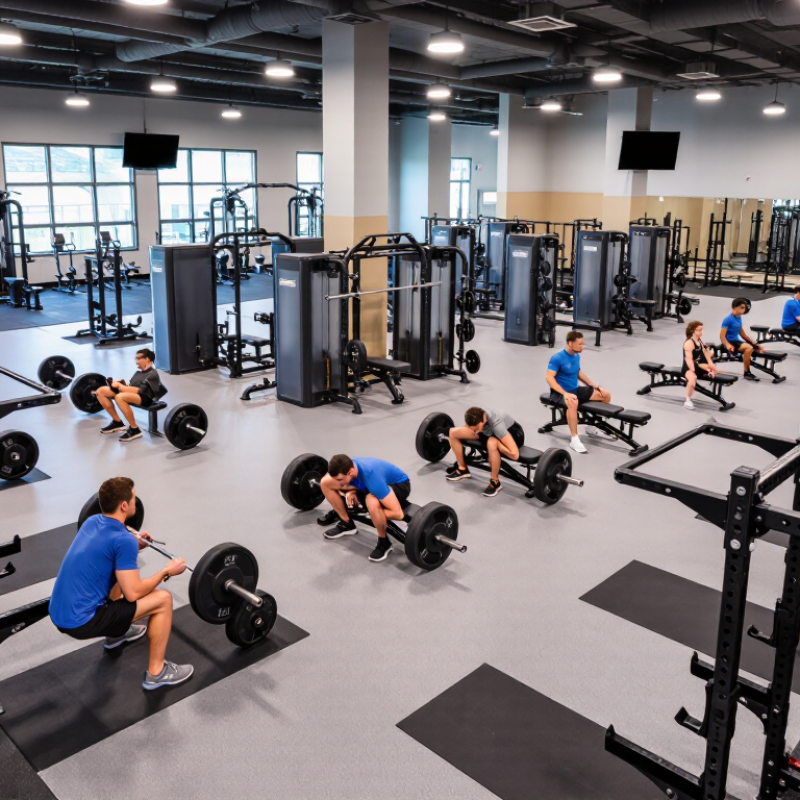
Before comparing equipment, decide what your gym is designed to help members do. A small community gym serving beginners may need stable machines, adjustable benches, and clear walking space. A strength-focused facility may need more racks, plates, and room for supervised lifting. Different goals call for different layouts. A crowded treadmill row won’t help much if members are waiting to use the only squat rack.
Look beyond broad age or fitness categories. Ask members what they use, notice which stations sit idle, and observe busy hours. A short survey helps, but people sometimes request equipment they rarely use. Check the pattern against actual traffic. Keep it honest. Also consider accessibility, training experience, and available floor space. For example, leave enough room around benches for safe movement, and make key adjustments easy to reach. If members train in short sessions before work, durable, simple-to-adjust equipment may matter more than specialized features. That assumption can be wrong, though. Review usage again after the gym has operated for a few months, and adjust the plan as real needs become clearer.
Before buying equipment, measure the room’s usable floor area, not just its wall-to-wall dimensions. Mark doors, columns, radiators, and outlets on a simple sketch. Then measure each machine’s footprint and leave clear paths between stations. A treadmill may fit on paper but still block a door when its belt is raised. Allow room for mounting, movement, and maintenance access. Small details matter.
Try laying out cardboard rectangles in the planned positions. Walk the route carrying a gym bag, and check whether two people can pass safely. Ceiling height matters for overhead movement and tall equipment. Measure delivery access too; a machine that fits the room may not clear a narrow stairwell. These checks are easy to skip.
Set the budget before shopping, and reserve part of it for flooring, delivery, assembly, and repairs. For example, a rower may look inexpensive until suitable floor protection and transport are added. Prioritize equipment that supports your main users and training goals. A modest rack, adjustable bench, and free weights may serve more people than several rarely used machines. Still, that choice depends on supervision, storage, and the people who will use the space. Write down your assumptions. Then check them again.
Choose equipment by the training people will actually do, not by how impressive a room looks. For general strength, adjustable benches, dumbbells, and a few racks offer flexible options without filling every corner. A power-focused group may need lifting platforms and heavier plates, with enough clearance for safe bar movement. Check ceiling height, floor capacity, and walking paths before ordering. Small details matter.
For cardiovascular training, treadmills suit walking and running, while bikes and rowing machines provide lower-impact alternatives. Try each type with intended users when possible; comfort and easy adjustments affect whether equipment gets used. Functional training areas benefit from open floor space, mats, resistance bands, and kettlebells. Keep weights organized and leave clear routes between stations. For mobility or recovery sessions, prioritize stable mats and simple supports rather than bulky machines. I still find the balance tricky: a plan can look spacious on paper and feel crowded during a busy evening. Start with a few well-matched pieces, observe which stations stay occupied, and check maintenance needs before expanding. That can save space.
A machine can look solid and still feel unstable under load. Check the frame for sharp edges, loose bolts, uneven feet, and visible weld defects. Sit on benches and adjust seats through their full range. They should lock firmly, without slipping or wobbling. Test cables and pulleys slowly; fraying, rough movement, or unusual noise deserves attention. Ask for the equipment’s rated capacity and clear setup instructions. Small details matter.
Safety depends on fit as well as construction. Leave enough room to enter, exercise, and exit without bumping nearby equipment. Handles should feel secure in your grip, while adjustment pins should be easy to see and fully engage. Maintenance can be easy to underestimate. Review cleaning instructions, replacement-part availability, and the routine checks required for moving parts. A quick weekly inspection may catch loose hardware early, but follow the maker’s schedule too. I sometimes overvalue a smooth first test; repeated use can reveal what one visit misses.
Tips: Keep a simple inspection log. Note cable wear, loose fasteners, and unusual sounds. Wipe sweat from contact points after use, and avoid harsh cleaners unless the instructions allow them. Before buying, ask who handles repairs and how long common parts usually take to arrive. If maintenance sounds vague, pause and ask again.
Before buying equipment, sketch the room to scale and mark doors, columns, storage, and walking routes. Group machines by activity: cardio near power access, strength equipment around shared plate zones, and open space for mobility work. Keep sightlines open. Leave enough clearance for users to enter, adjust seats, and move safely; follow each unit’s specified spacing rather than squeezing in one extra machine.
Use demand data as a guide, not a shopping list. The Health & Fitness Association’s 2024 Global Report counted 72.9 million U.S. health-club members in 2023, signaling a large potential user base. ACSM’s 2024 Worldwide Fitness Trends survey ranked personal training sixth and functional fitness seventh. That supports planning for both coached sessions and adaptable floor space, but local member preferences matter more than national rankings.
Prioritize purchases in stages. Start with versatile essentials that serve several ability levels, then track bookings, queues, and repair needs for several weeks. Add specialized machines only when usage supports the cost and floor area. A simple spreadsheet can record peak-hour demand and downtime. My first layout would still be a hypothesis; real traffic may reveal awkward bottlenecks. Rework it before adding more equipment.
Plan your equipment layout and prioritize purchases by comparing the approximate floor space occupied by common gym equipment.
Footprints are approximate planning estimates based on typical equipment dimensions; actual models vary. Allow additional clearance for safe use and access. Consider starting with versatile essentials, such as a power rack and adjustable bench, then add equipment to match member demand and available space.