
Choosing golf course wedding venues in 2026 requires more than admiring manicured fairways. The right setting must support your ceremony, reception, guests, and practical wedding plans. A sweeping sunset view may look perfect in photographs. Yet, a distant clubhouse can create difficult guest transfers. Small details matter.
Experienced wedding planners recommend visiting each venue during a real event. Observe parking, restroom access, lighting, sound control, and staff communication. Ask where guests will wait if rain arrives. Confirm whether the course remains active during your celebration. Golf carts may add charm, but they also require clear routes and trained drivers. Accessibility should never become an afterthought.
Weather planning deserves careful attention. A shaded terrace can feel comfortable at noon but chilly after sunset. Review indoor backup spaces, heating, cooling, and flooring before signing an agreement. Also examine catering policies, vendor restrictions, service charges, and cancellation terms. Reliable venues explain these details clearly. Vague promises deserve questions.
Sustainability may influence venue choice in 2026. Ask how the property manages irrigation, waste, lighting, and landscaping. Responsible practices can improve the guest experience without weakening the celebration. However, eco-friendly language alone proves little. Request specific examples.
A beautiful venue can still be inconvenient. That is worth remembering. Compare each property against your guest list, budget, style, and comfort priorities. The best golf course wedding venues balance scenery with dependable service, realistic logistics, and honest communication. A thoughtful decision may feel less dramatic at first, but it usually creates a smoother wedding day.
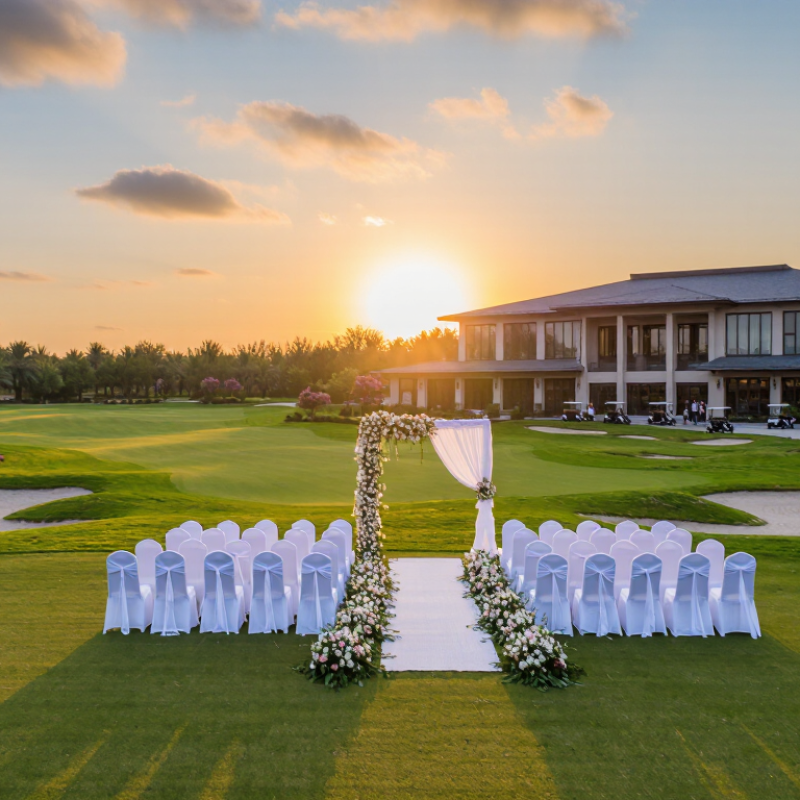
Golf course wedding venues usually fall into private clubs, public courses, resorts, and municipal facilities. Private clubs often provide polished service, formal dining rooms, and carefully managed grounds. They may also enforce strict décor, photography, or guest policies.
Public courses can feel more relaxed and affordable, with scenic fairways and flexible event spaces. However, weekend tee times may compete with wedding access.
Resort courses combine ceremony areas, guest rooms, restaurants, and weather backup spaces. This option suits couples hosting relatives from different cities. Resort layouts can feel convenient, but package fees may hide service charges or minimum spending requirements. Ask for a complete estimate. Every line matters.
Links-style courses offer open views, coastal grass, and strong wind exposure. Parkland courses provide trees, ponds, and more sheltered photographs. Visit both during your planned season, not only on a bright afternoon.
A clubhouse reception works well for older guests because restrooms and seating remain nearby. An outdoor ceremony needs a clear rain plan, stable flooring, and accessible paths.
During a site inspection, test the walking distance between parking, ceremony, and dinner areas. Listen for nearby maintenance equipment. Check sunset timing against your photography schedule.
I would not choose a venue from photographs alone; images rarely show slopes, noise, or crowded cart paths.
A qualified coordinator should explain capacity limits, catering rules, insurance requirements, and cancellation terms in writing. Ask awkward questions early. They often reveal the real venue type.
Location should reduce travel friction, not create another wedding task. The 2024 Real Weddings Study reported an average guest count of about 115 people. That number changes the practical meaning of “nearby.” A course 20 minutes farther may add hours of collective travel. Map drive times from the ceremony, airport, hotels, and major residential areas. Check weekday and weekend traffic, not just quiet Sunday routes.
Accessibility deserves more than a ramp at the entrance. The Centers for Disease Control and Prevention reports that about one in four U.S. adults has a disability. Ask about step-free paths, accessible restrooms, stable flooring, elevator access, and seating near ceremony areas. Golf carts can help, but they should not be the only mobility solution. Confirm their availability, weather policy, and trained operators in writing. Small details matter. A long grass path can be beautiful and difficult.
Guest convenience also depends on transport design. The Bureau of Transportation Statistics’ National Household Travel Survey shows that roughly 87% of trips use personal vehicles. Provide clear parking, lighting, drop-off space, and signs visible after sunset. If guests will drink, arrange licensed transportation and reserve vehicles early. The U.S. Department of Transportation recommends checking pedestrian access and passenger loading areas during site planning. I would not assume a scenic course is automatically convenient. Visit during a busy period, time the walk from parking to the ceremony, and ask a less mobile guest to test the route. My first impression may still be wrong.
A golf course wedding needs three spaces that work together. The ceremony site should offer a clear aisle, comfortable seating, and attractive views. Check the sun direction at the planned ceremony time. Bright backlighting can affect photographs and guest comfort. Also inspect walking paths, restrooms, and access for older guests. A quiet green may look perfect, but distant maintenance noise can interrupt vows.
The reception space requires different testing. Measure the room for dining tables, a dance floor, buffet service, and photographer movement. Ask how many guests fit comfortably, not simply how many fit legally. Confirm power access, lighting controls, heating, and cooling. A room with large windows may create beautiful evening pictures, yet become hot before sunset. I have seen couples focus on scenery and overlook poor acoustics. Speeches then sounded unclear.
The backup space deserves equal attention. Rain changes everything. It should be ready for the same guest count, ceremony layout, and essential décor. Ask whether staff can move chairs quickly between ceremony and reception areas. Review the weather decision deadline, flooring, drainage, and indoor photography options. A covered patio may protect guests, but wind can still damage flowers and signage. That matters. Request a written floor plan and visit each space during a real event if possible. My own planning mistake was trusting a verbal promise about indoor seating. Written details prevent uncomfortable surprises.
Choosing a golf course wedding venue requires more than admiring manicured fairways. Review every package line carefully. Check whether tables, chairs, linens, lighting, staffing, cake cutting, and cleanup are included. Some prices exclude service charges, taxes, or overtime fees. Ask for a sample final invoice, not only the advertised starting price. A beautiful package can become expensive quickly.
Policies deserve equal attention. Confirm cancellation deadlines, weather plans, noise limits, decoration restrictions, alcohol procedures, and payment schedules. Ask whether ceremonies can continue during course maintenance or private events. Vendor rules may require approved caterers, specific delivery windows, insured suppliers, or restricted access for large vehicles. Clarify setup time and power availability. I once treated the package total as the real price. That assumption was careless. Small exclusions changed the budget noticeably.
Tips: Compare three written proposals. Mark every included and excluded item. Request a site tour during a real wedding setup, if possible. Watch the path between the ceremony lawn and reception room. Guests may cross uneven ground or travel far in formal shoes. Ask who supervises vendors on the wedding day. Put every verbal promise into the contract. Leave a contingency amount for weather, overtime, and last-minute rentals. Keep questioning unclear wording.
Selecting a golf course wedding venue should begin with your wedding vision, not its photogenic fairways. Imagine the guest experience from arrival to departure. Can older guests reach the ceremony comfortably? Is the dinner space warm, quiet, and accessible? A beautiful view cannot repair poor movement between rooms. The 2024 Real Weddings Study reported an average U.S. wedding cost of $33,000 and 117 guests. Those figures make capacity, pricing, and comfort practical decisions.
Visit the course during your planned season and near your ceremony time. Notice wind, shade, cart noise, and the distance between key spaces. Ask for a complete fee sheet, including service charges, ceremony access, rentals, overtime, and weather plans. Confirm whether outside suppliers, live music, or cultural decorations are permitted. A covered terrace may protect guests from rain, but it might not suit a formal indoor vision. Small details matter.
Do not trust perfect photographs alone. They can hide steep paths, limited parking, or weak lighting after sunset. Request a recent event layout and speak with the venue coordinator about real timing. The Knot also reports that couples increasingly personalize ceremonies and receptions, so flexibility deserves serious attention. I would still leave room for doubt. A venue may meet every checklist item and feel emotionally flat. Walk slowly through the property. Notice whether the setting feels like your story, not merely a convenient package.